SPANISH SEO / GEO / WEBSITE CONTENT
Spanish SEO for car dealers, and Spanish content for your whole website.
Spanish SEO for car dealers starts with pages a Spanish speaker can use. Every model you sell, explained in Spanish. Financing, paperwork, your store, your town, in the language a large share of your buyers shop in.
REQUEST A FREE ANALYSIS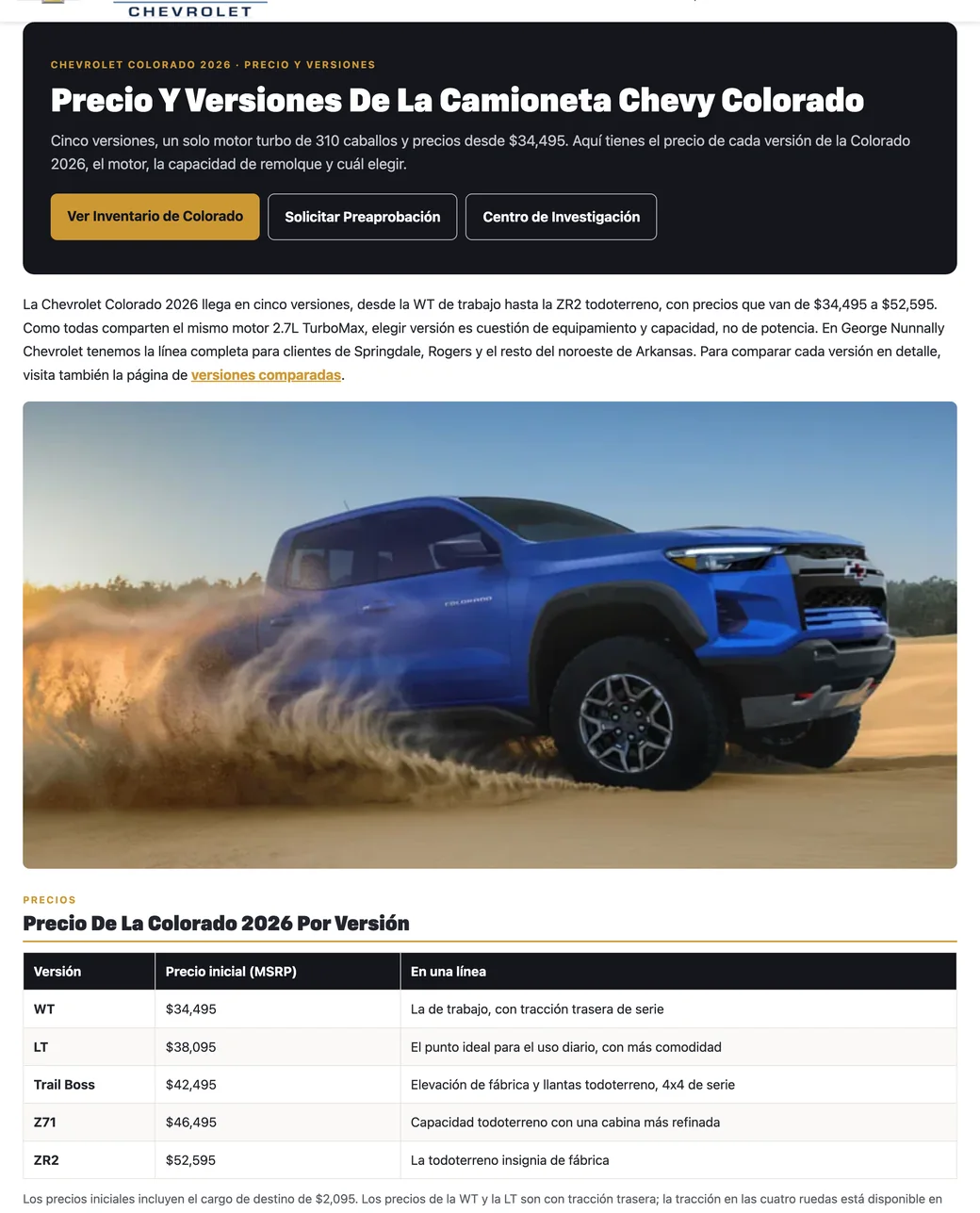
ANSWER IN BRIEF
What is Spanish SEO for car dealers?
Spanish SEO for car dealers means writing the Spanish side of your website, then making sure Google can find it. Every model you sell, explained in Spanish. Prices, versions, towing capacity, and which one fits which buyer. Financing. The paperwork a customer needs. Your store. Your town. Most dealers think they have this covered because the website has a translate button. A translate button changes what a visitor sees on screen. It creates nothing for Google to find, so a Spanish-speaking shopper searching for your trucks never lands on you. Your English pages will not do the job either. Spanish shoppers search in completely different words: camioneta de trabajo, financiamiento sin crédito, requisitos para comprar un carro. Nobody in your market is answering those searches, and they will stay open until somebody does.
Reviewed by Carbide Digital
KEY TAKEAWAYS
The short version.
- Your whole site in Spanish. Models, prices, financing, paperwork, your store, your town.
- A translate button creates nothing Google can find. It is why most dealership Spanish sites rank for nothing.
- Spanish shoppers search in different words. The volume sits in camioneta, troca, financiamiento and requisitos.
- In most markets the manufacturer is the only one publishing in Spanish. The dealership pages are still open.
01 THE OPPORTUNITY
Nobody types the Spanish version of an English headline.
Spanish content sits alongside the rest of the search and content work, and is normally added to an existing engagement rather than bought on its own.
Spanish SEO for car dealers is not website translation.
02 IN DEPTH
Live client pages, in Spanish.
#Why a translate button ranks for nothing
A shopper clicks it, the words change on screen, and nothing else does. The English copy is still what Google has on file. Right-click your own site, hit View Page Source, and search it for a Spanish word: if the only hit is the language button, you do not have a Spanish website.
#Spanish search is not translated English
English shoppers research specs and trims. Spanish shoppers research whether they qualify: what paperwork is needed, whether credit history in this country is required, whether anyone at the store speaks their language. Your English site has no page for any of it.
TABLE
Where a translated page and a Spanish shopper stop matching
Left: what an English dealership page is built to answer. Right: what a Spanish-speaking shopper in the same market types. They are not translations of each other.
| What the English page targets | What the Spanish shopper types | Why translation misses it |
|---|---|---|
| Silverado 1500 work truck | camioneta de trabajo / troca | Regional usage. There is no English phrase to translate from. |
| Bad credit auto financing | financiamiento sin crédito | No credit history, not damaged credit history. Different problem. |
| Buy here pay here | compre aquí, pague aquí | A fixed Spanish-market phrase, not a word-for-word rendering. |
| Car buying process | requisitos para comprar un carro | The Spanish query asks what is required. The English one asks how it works. |
| Contact our sales team | concesionario que habla español | The question is about language, which the English page never answers. |
| Used SUVs under $25,000 | camionetas usadas en [ciudad] | Different word for the body style, and type outranks price. |
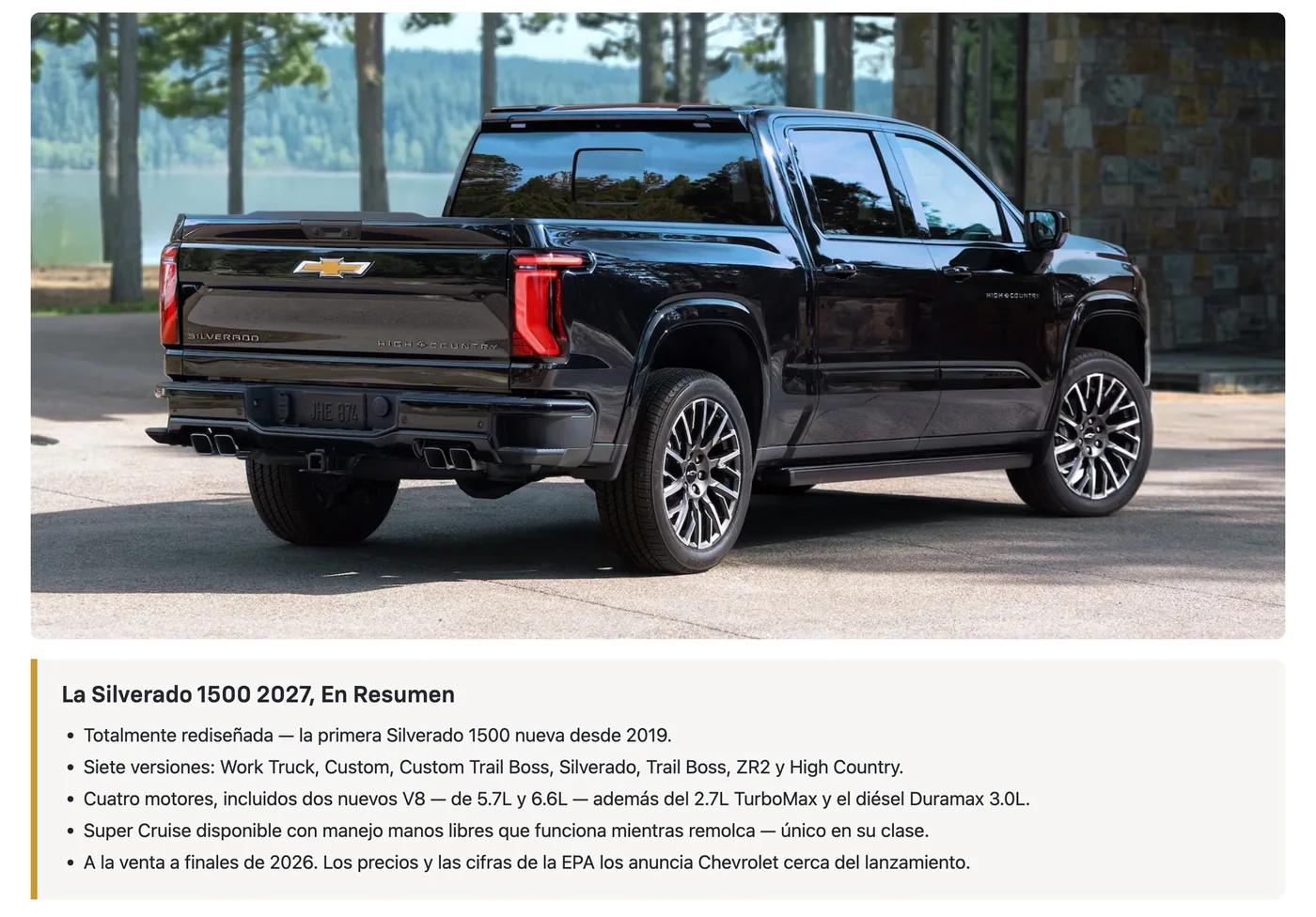
#Price, in the words a shopper uses
Five versions, five prices, one plain line on each. In Spanish, on your own site, with your own photography.
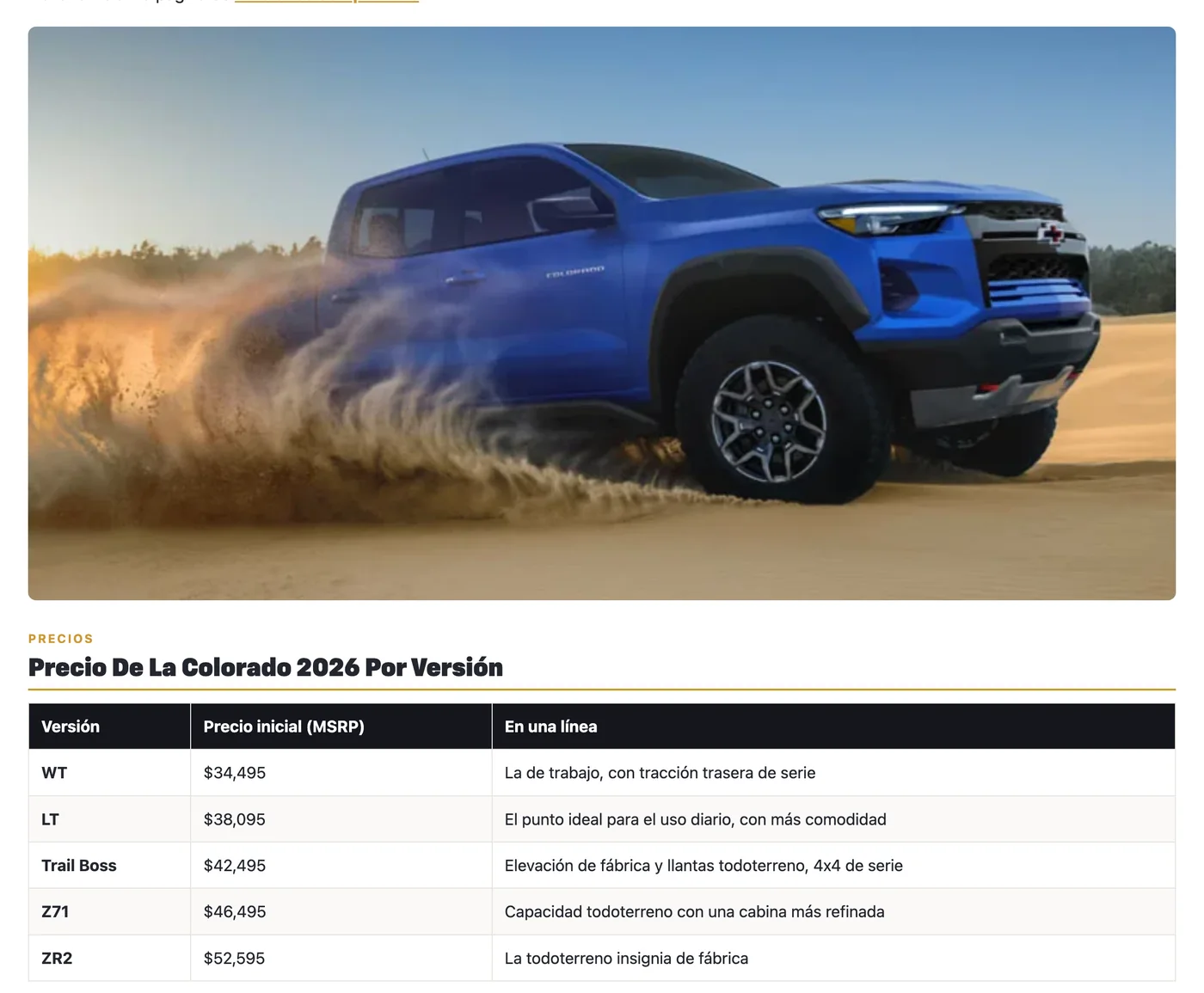
#The table that decides the sale
Which version should I buy is the question that brought them to your website. Most dealers never answer it, so the shopper leaves to go and find out somewhere else. Yours answers it, in Spanish, and they stop shopping.
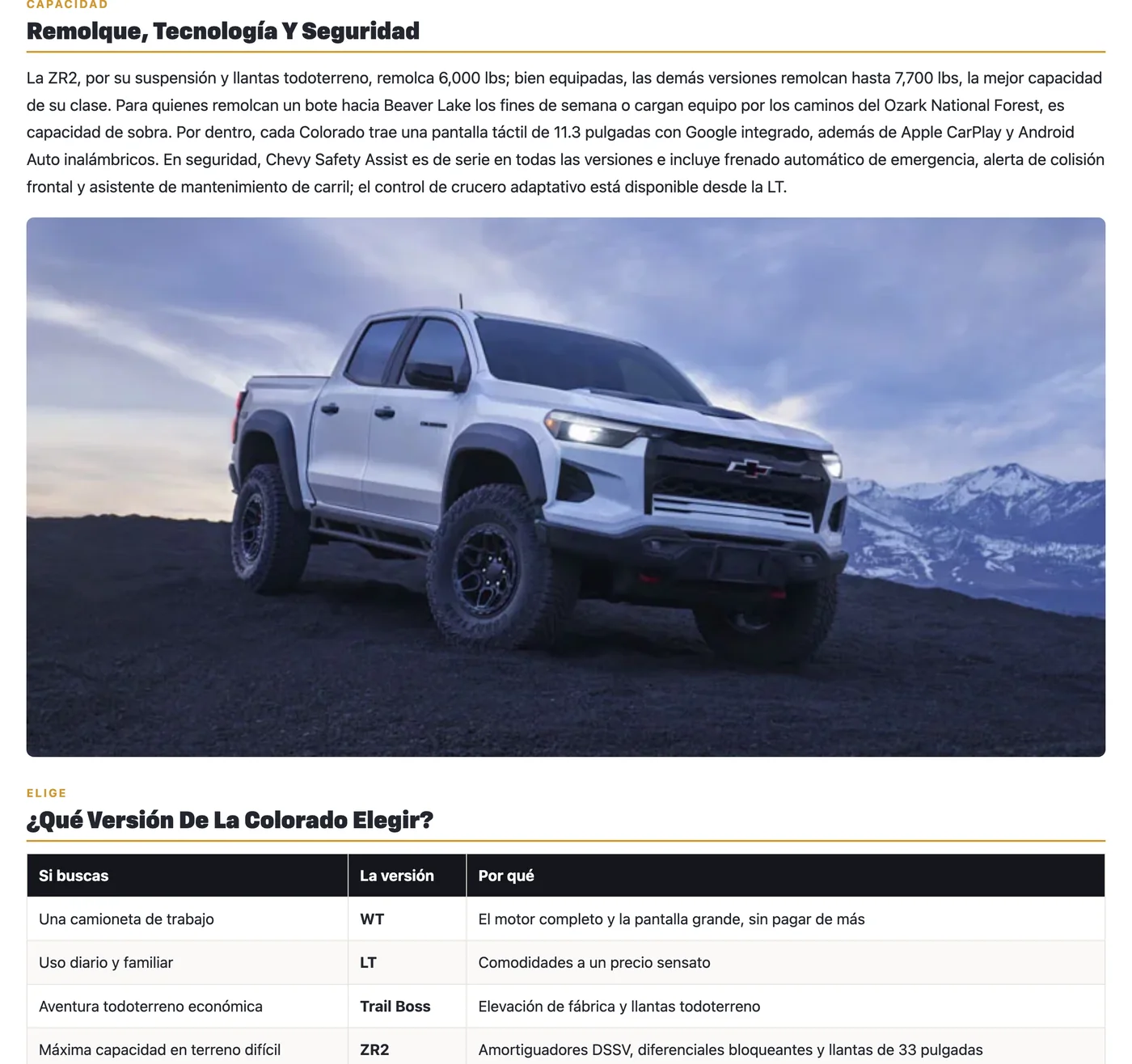
#Versions explained as people, not equipment
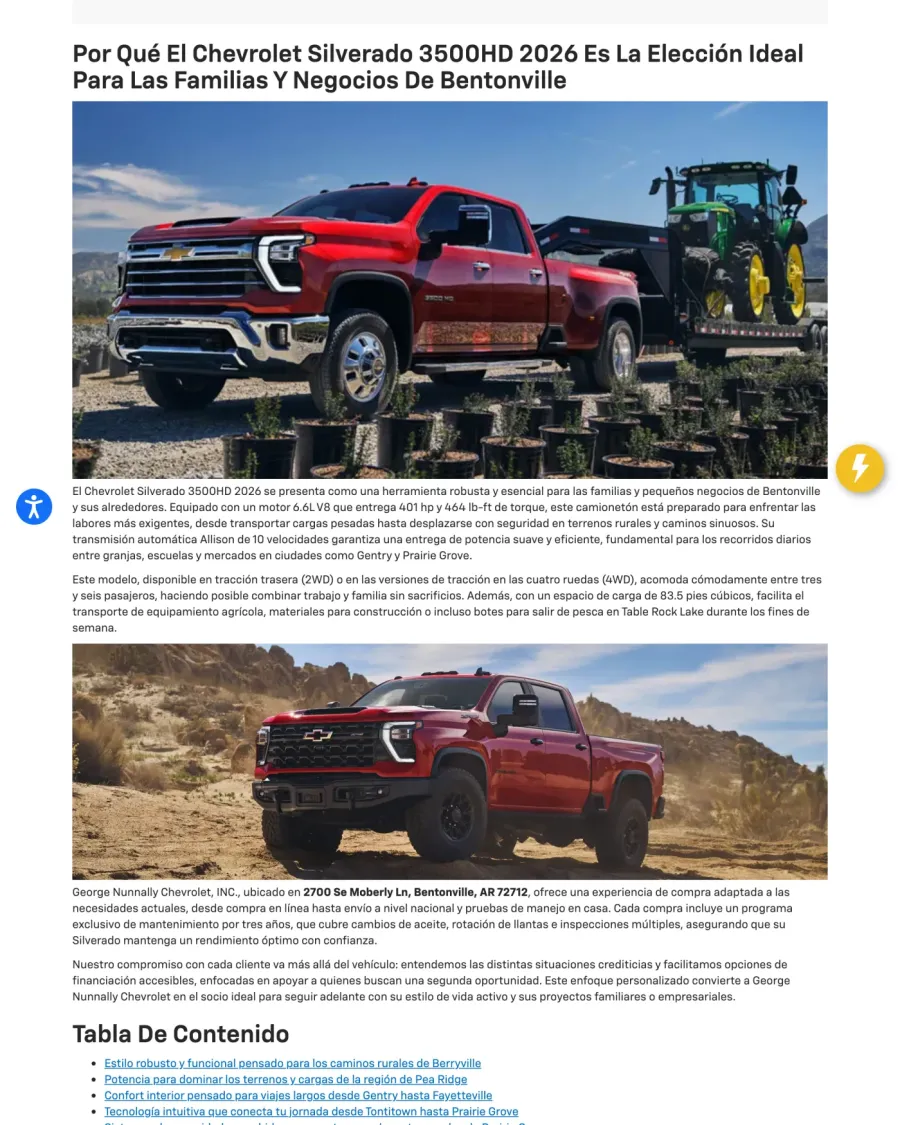
Seven versions on one truck line is where a shopper gives up. Yours tells them, in Spanish, which one was built for someone like them.
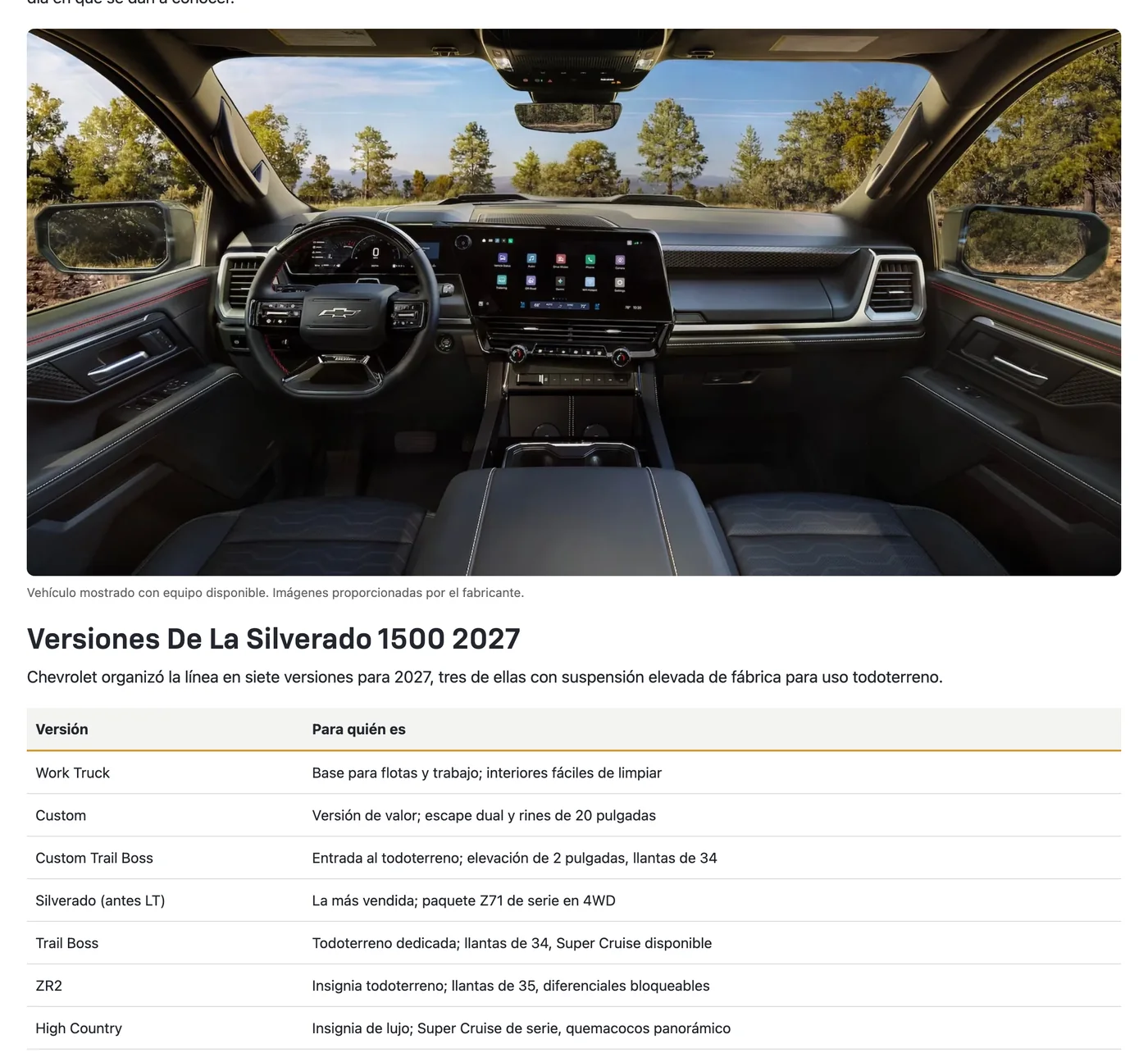
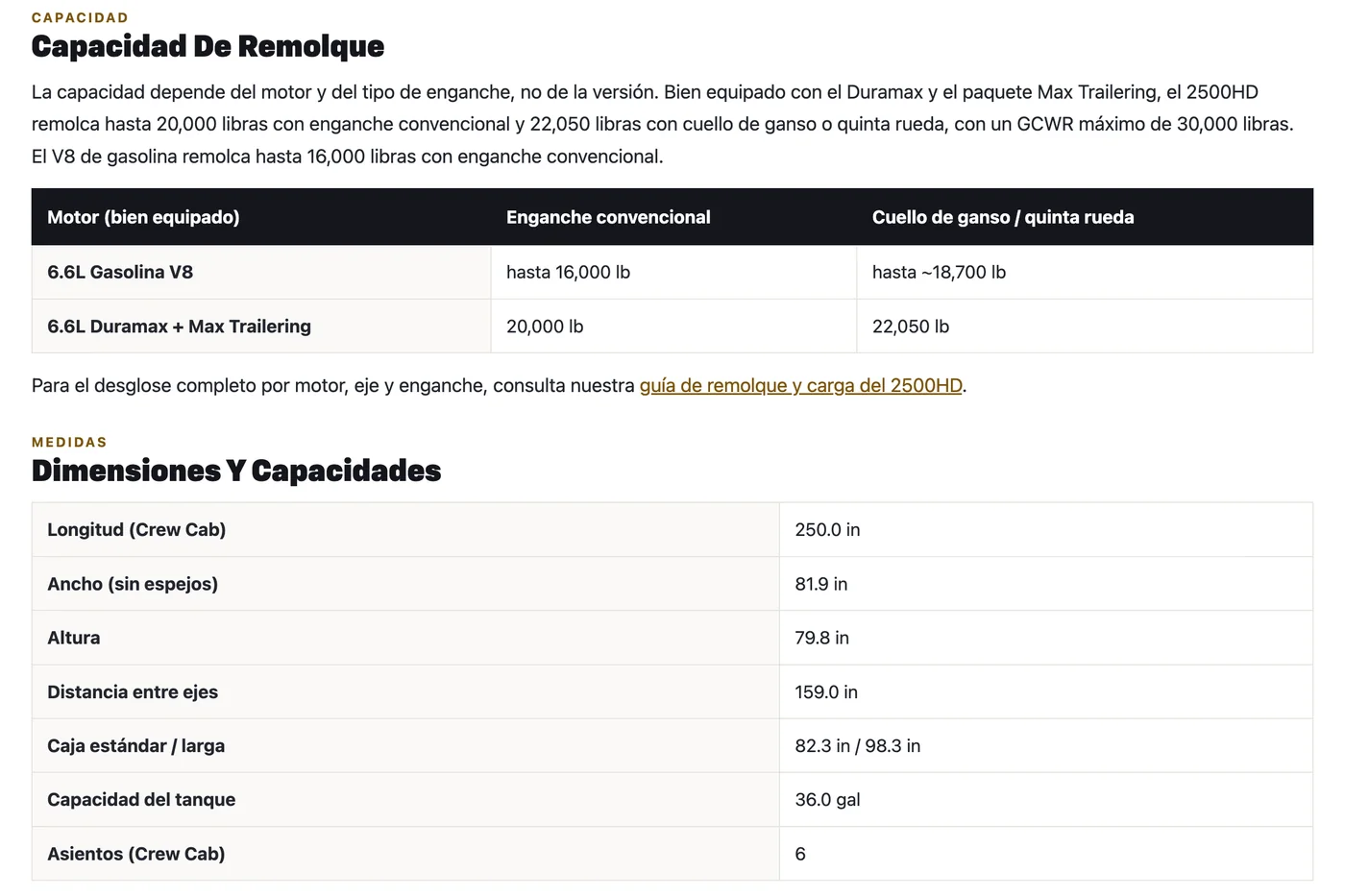
#Figures a shopper can act on
Heavy duty is where a wrong number sells the wrong truck, and the wrong truck comes back. Every figure comes straight from the manufacturer, with the condition attached to the number instead of buried in a footnote.
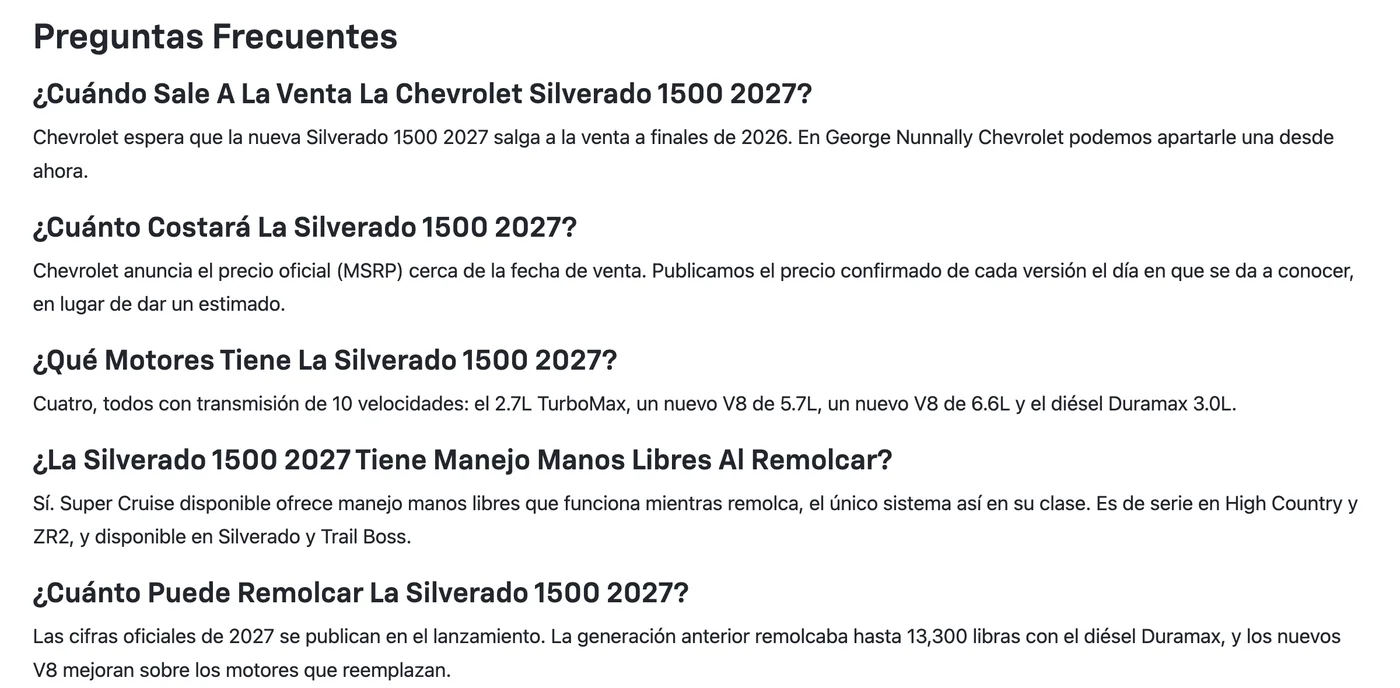
#The FAQ block is where AI answers come from
Ask ChatGPT a Spanish question about a truck or a dealership and there is barely anything for it to draw on. Your page can be what it quotes. Same job as our car dealer GEO and dealership AEO work, in a language nobody is competing in.
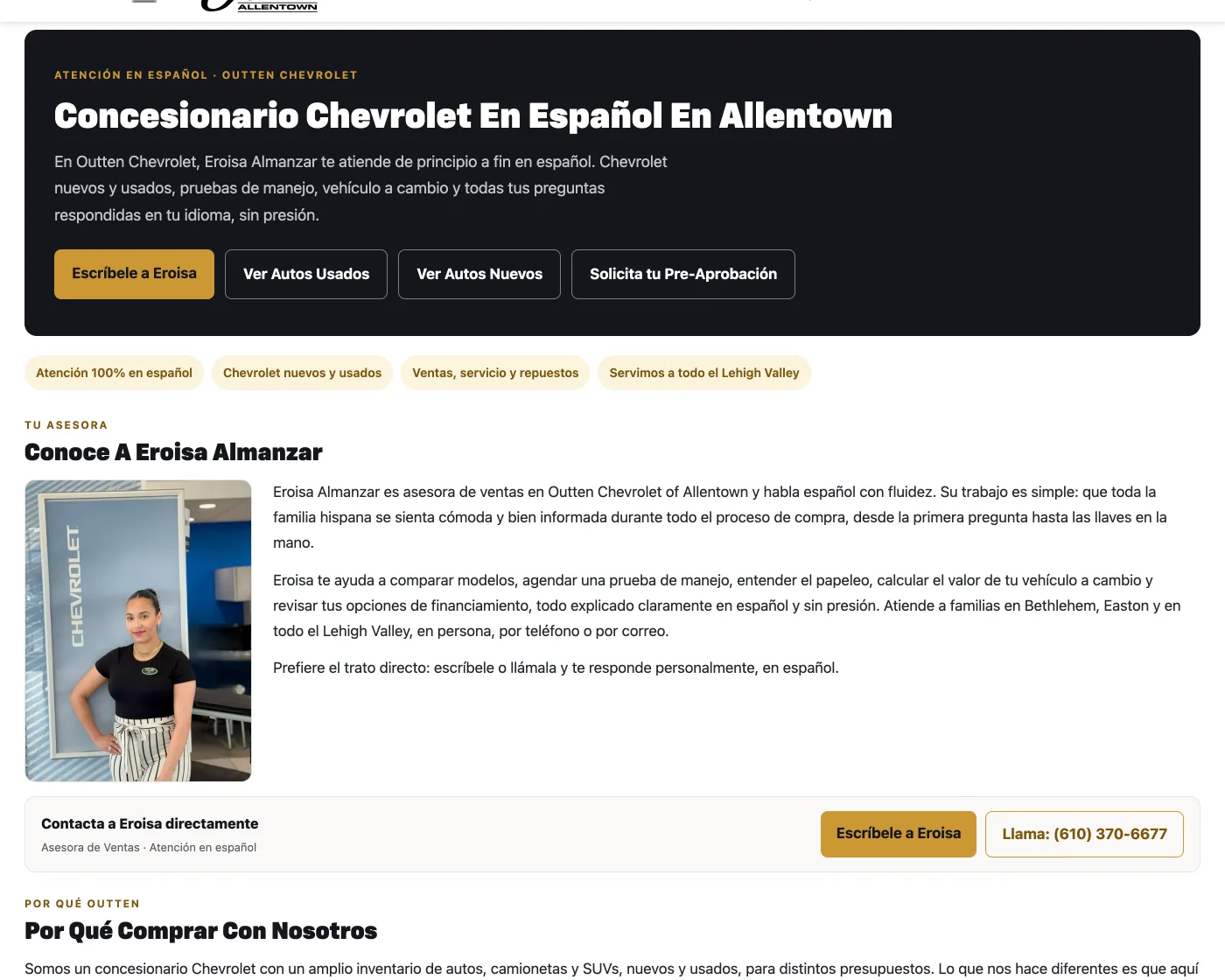
#Put your Spanish-speaking staff front and centre
By name, with a photo and a number that reaches them.
03 THE RESULT
What a store gets out of it.
Spanish buyers find you first
Somebody types camioneta de trabajo in your town and your page is what comes back. Not the manufacturer, not a national listing site, not the store one exit up the highway.
They get all the way to the end
They read the version table, get a straight answer on the payment question, and reach somebody who speaks their language. Nobody drops out at the moment they decided to buy.
You own ground nobody is fighting for
Every other dealer in your market is running a translate button and calling it covered. Those searches stay open until somebody publishes Spanish pages Google can find.
04 QUESTIONS
Clear answers on Spanish SEO and GEO for car dealers.
Is this just translating our website?
+
No. Translation is the thing that does not work. A translated page keeps the English page's search targeting, so it aims at the Spanish wording of English phrases, which nobody types. Several of your Spanish pages will have no English equivalent on your site at all.
Our website provider already offers a Spanish site. How is this different?
+
Check what it publishes. A translate button shows the visitor Spanish, but the page Google has on file is still the English one, so there is no Spanish address to rank or link to. Search your page source for a Spanish word: if the only hit is the language button, nothing of yours is in Spanish as far as Google is concerned.
Will Spanish pages hurt our English rankings?
+
No. They are separate pages aimed at searches your English pages cannot compete for, so there is nothing to take traffic from. Each one is tagged as Spanish and paired with its English counterpart where one exists, which tells Google the two are alternates and not duplicates.
How do you decide which Spanish words to use for our market?
+
Your market decides. Southwest and Northeast markets differ on the word for a pickup and on whether to address a customer as usted or tú. Getting it wrong is the tell that a machine wrote the page, and a Spanish-speaking buyer spots it immediately.
Do we need a Spanish speaker on staff for this to work?
+
It works better with one. The pages generate Spanish-language enquiries, and a store that cannot answer them in Spanish closes fewer of them. If nobody on your floor speaks Spanish, the pages set that expectation up front rather than imply a capability you do not have.
Which markets is Spanish content worth doing in?
+
The number that matters is how much of your county speaks Spanish at home, set against how many Spanish pages already exist near you. In single digits the return is thin. Above that it is the least contested content a store can publish.
Do the Spanish pages get reported separately?
+
Yes. Impressions, searches, rankings and form submissions from the Spanish pages are reported on their own, instead of folded into a site-wide number where a few hundred Spanish sessions disappear against the English traffic.
Does this help with AI answers, not just Google?
+
Yes, and the gap is wider there. Spanish questions about vehicles and dealerships have far less published material behind them than the English ones, so your page competes against much less. Same job as our car dealer GEO work, in a second language.
Can you write about financing in Spanish without creating a compliance problem?
+
Yes, by covering the process rather than the terms: what documents a store accepts, what the steps are, and who to talk to. The pages never state rates, approval odds or guarantees in either language, and a translated disclaimer still has to be correct. Anything specific to your own advertising is a question for your compliance counsel.
What if we cannot get changes made to our website?
+
Most dealer platforms allow custom pages even where they do not allow template changes, and several requirements can be delivered through a sitemap you control instead.
What does it cost and how do we start?
+
The number depends on your market and your lineup. Ask for a free analysis and you get a straight answer on whether Spanish is worth doing where you are.
How many Spanish pages does a typical dealership need?
+
Fewer than a full mirror of the English site. The pages that earn their place are the ones a Spanish-speaking shopper searches for: model and trim pages for the vehicles that sell in that market, financing and service-process pages, and the department and hours information every shopper checks first. A full duplicate site is more pages than most stores can maintain in a second language.
Do the Spanish pages need their own reviews and testimonials?
+
Not separate reviews, but a Spanish-speaking shopper deciding whether to trust the store should see evidence that other Spanish speakers were served well there, whether that is a review platform's own language filter or a staff photo naming who on the floor speaks Spanish. An English-only review section next to a Spanish sales page reads as an afterthought.
05 GO DEEPER
Original analysis behind this work.
Bilingual dealership staff decide whether a Spanish lead becomes a sale.
Bilingual dealership staff, not the Spanish page, decide whether a Spanish-language enquiry converts. Where it commonly breaks, and what holds it together.
READ THE INSIGHT ↗CONTENTDealership Spanish content is not a translate button.
Dealership Spanish content and a Spanish button are two different things. A two-minute check on your own website tells you which one you are paying for.
READ THE INSIGHT ↗